Recognition workbench for planning with recognition (AAAI 2017)
An interactive Block-words simulation of Freedman and Zilberstein's recognizer — likelihood, dynamic prior, necessity conditions, and R_ring's responsive plan — with guided tutorials and the paper's running example step by step.
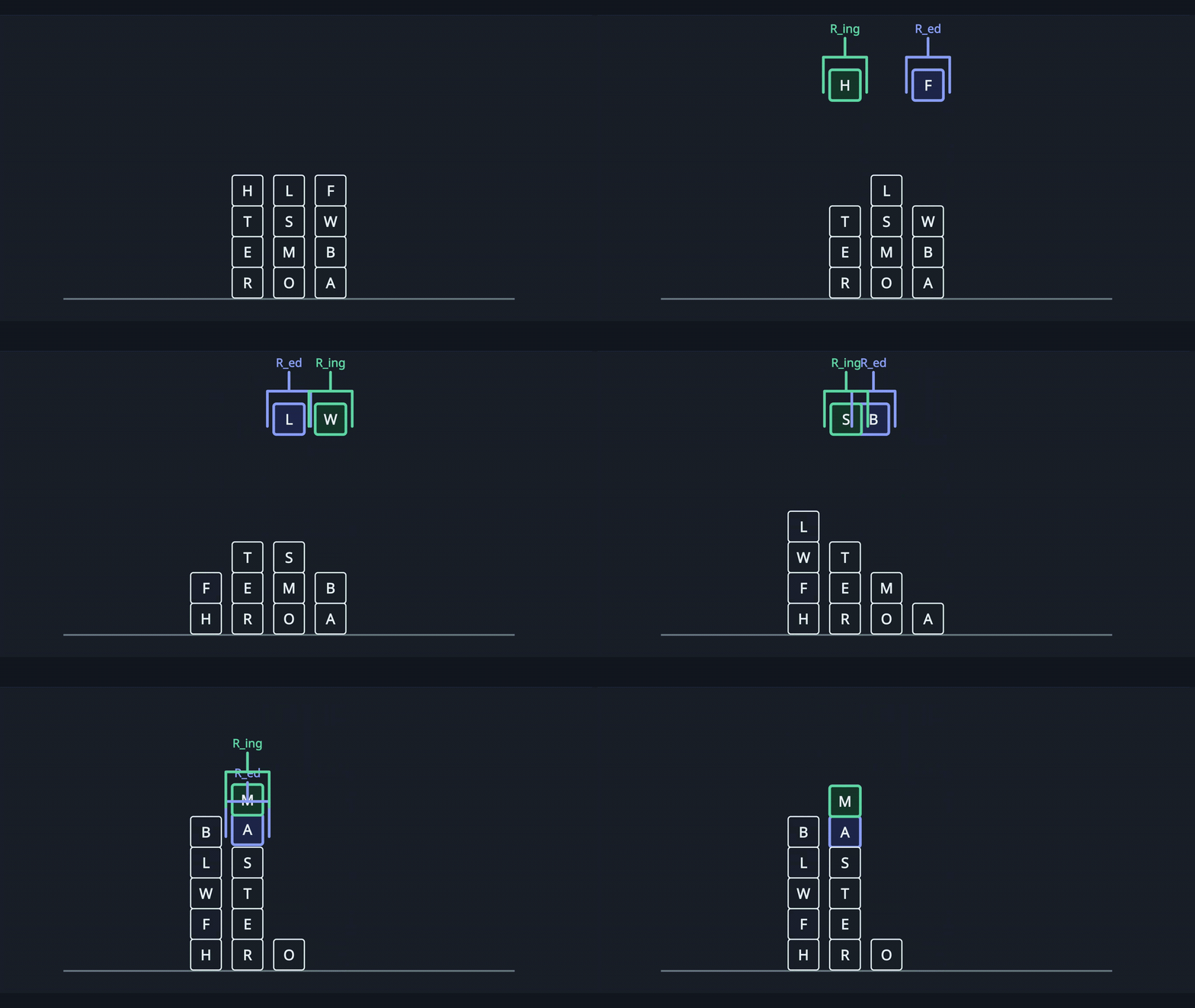
This is an implementation I built while studying Freedman and Zilberstein (AAAI 2017): a browser workbench for the Block-words example in the paper, not just the formulas on the page. R_ed spells a hidden word; R_ring watches, updates beliefs over the twelve candidate goals, and plans help when the necessary conditions say it is time.
The simulation is one self-contained HTML file hosted on this page. You can step through R_ed's trace, replay it, and change β, λ, τ, and ε to see how likelihood, foresight, and the response threshold move. Guided tutorials walk the layout first, then follow the paper's statistics with the numbers from the live run. Tables show planner costs c(G+O) and c(G+Ō), posteriors, and the responsive plan R_ring commits to.
Use Open workbench for the simulation and tutorials.